EXODUS
HARDWARE RANCH, UTAH

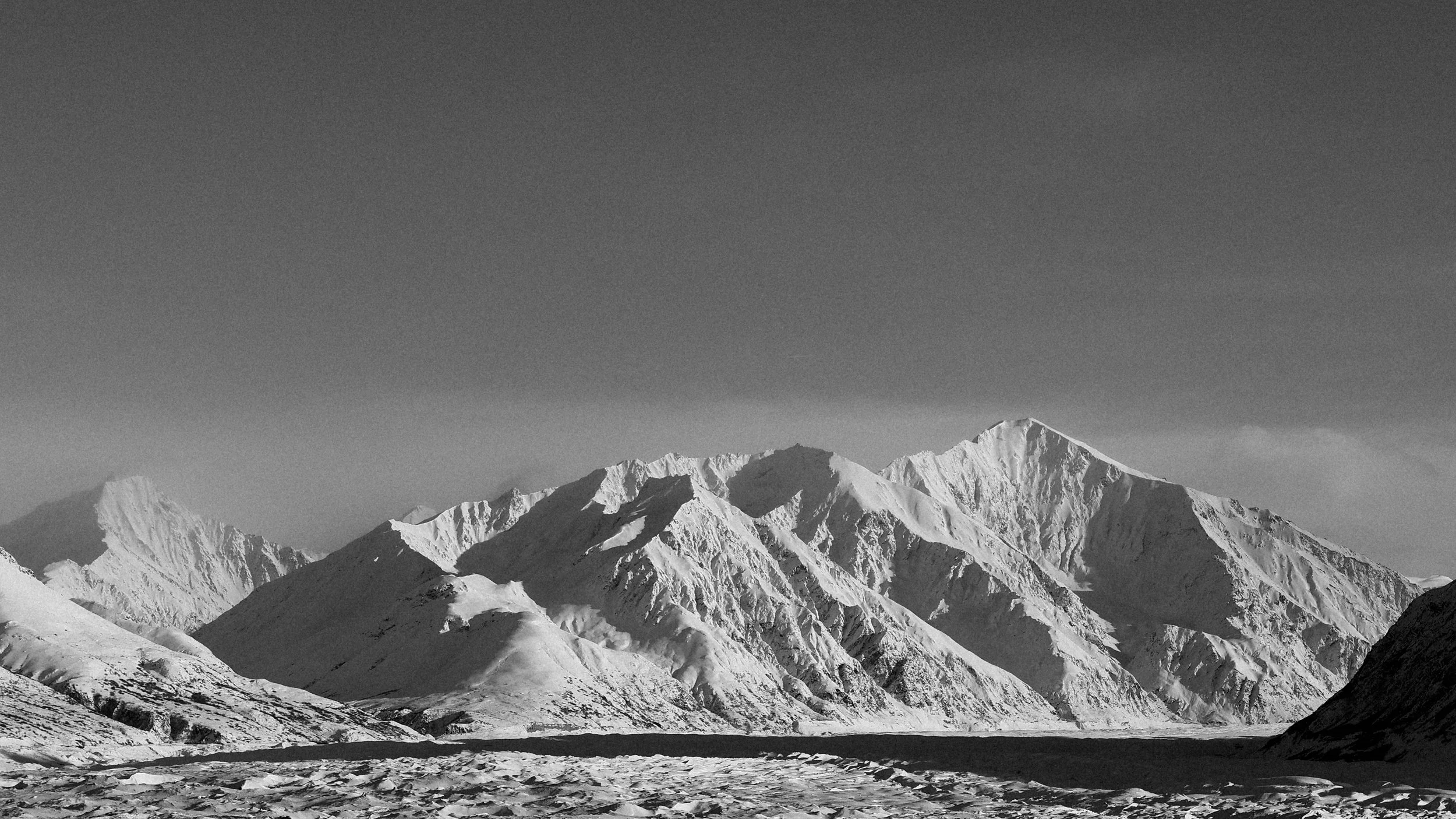
Ole Hansen Andersen was born August 20, 1858, in Denmark. A son, in 1902. Died February 23, 1943, in Hyrum, Utah, eighty-four years old. That's the whole record. A birth, a son, a death, and in between it, a piece of property in Cache Valley Utah bordering what the government eventually decided to call Hardware Ranch.
He's my third great-grandfather, which is a distance that should make him a stranger and somehow doesn't. Nobody in my family could tell me what his voice sounded like, or whether he laughed easily. What they could tell me was the mythos: a man who came from nothing and made something, tougher than the ground he worked, repeated at enough dinner tables to harden into fact. I believe most of it. I just know that's how it goes in every family. Even the true things wear down to their simplest shape, until what's left isn't a lie, just the outline of something too large to pass down whole.
I share his name. Technically my middle name, buried between two others on paper, but the one that stuck before I had any say in the matter. My parents were calling me Ole while I was still in diapers. I didn't choose it. It just turned out to be the one that fit. I call him Ole the First now, just to stop confusing the two of us, which is a strange problem to have about a man who's been dead longer than anyone alive has been breathing.
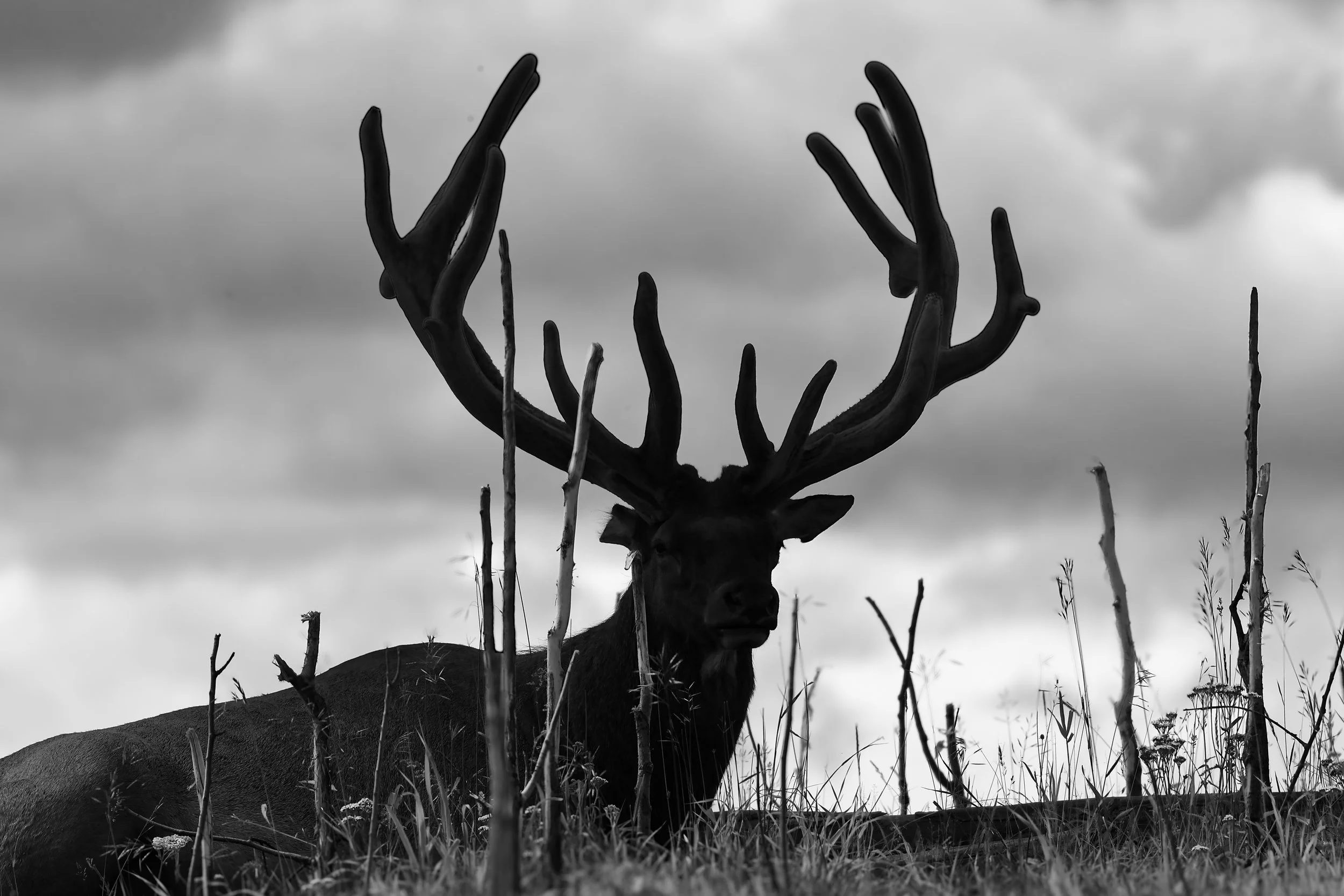
I'd been to Hardware Ranch more times than I could count, going back to when I was too small to hold a camera steady. I was standing on what used to be his side of that line, someplace I'd stood a hundred times before without thinking twice about it, when I found the bull. Dead standing timber, antlers going up into a sky that had already decided against him for the day.
A truck comes through every winter and drops grass hay on a valley floor that used to require a great deal more from an elk than standing there and waiting. Nobody asks the herd how they feel about the arrangement. Wildlife management isn't big on exit interviews.
He's not wild. Not the old kind. I don't say that to insult him. I say it because I recognized the shape of it before I understood why, and once I did, I couldn't stop thinking about it for two days.
Ole the First didn't get fed. Whatever he had, he built out of a Danish accent and a willingness to be cold for a long time, on land that offered him nothing back except the chance to try. There wasn't a version of his life where he opted out of hardship and things worked out fine anyway. His grit wasn't a personality trait. It was the toolkit, and it came with no receipt and no refund window, because the alternative to using it wasn't a softer life. It was no life.
There's a version of mine where I opt out anytime I want. Every mile of this, the work built, the name made into something people pay for, I earned it myself, and I'd do it again, but earning something and needing it were never the same sentence, no matter how much dirt ends up under the fingernails either way. Ole the First's stake was one specific thing he could point to: this fence, this herd, this frozen ground, and losing it meant something closer to dying than to inconvenience. Mine is diffuse, spread across a print run and a name and a business that could survive a bad year without anybody starving.
I sell prints of animals like this bull to people who have more money sitting in one place than any generation in this country's memory has managed to accumulate before. I call it the next gold rush when I'm being glib about it, and I mean it more than I let on when I'm not. Nobody's staking a claim on dirt anymore. They're staking a claim on the feeling of it: proof that something out there still runs on teeth and weather instead of a board meeting, and I'm the one who goes and finds it for them, writes it down, prices it, and frames it in Queens no matter how far I had to drive to get the shot in the first place. Ole the First's grit got him a fence. Mine gets performed, printed, and sold to somebody who wants to hang the idea of it on a wall. That's a third thing entirely, worse in some ways than either forced or freely chosen. Grit turned into inventory. I've never quite decided whether that makes me his continuation or his punchline.
The bull never has to answer any of this. He didn't choose the fence and he didn't choose the hay, and he doesn't lie awake wondering whether his stillness counts as peace or as surrender. He just stands there in timber that used to burn and now mostly just stands dead and waits, watching a truck neither of us drove decide what kind of winter we're both going to have. Not forced into anything anymore. Never given the choosing either. Something in between that doesn't have a name yet, because nobody needed one until the frontier stopped asking anything of anybody.
Ole the First arrived somewhere. A piece of ground he could finally stop calling temporary the day he died on it, eighty-four years old, one son behind him, in Hyrum, Utah, not far from where I was standing. I'm not sure mine was ever built to end anywhere. I keep crossing the same line back and forth like the line itself might be the destination, like motion has quietly replaced arrival as the thing I'm actually after, and I've been calling that freedom instead of what it might really be. A longer, better-lit version of never quite getting there.
It comes down to the same question every time. Whether effort spent on a frontier you picked is the same species of grit as effort spent because there was no exit from it, or the kind that was simply administered. Some days I think the answer is obvious and I don't like it. Most days I don't think there's an answer at all, just a question that gets a little heavier every time an old reflex fires on ground that never asked it to.
The bull put his head down and kept eating. He wasn't going anywhere. He never had to and never will.
I got back in the truck.
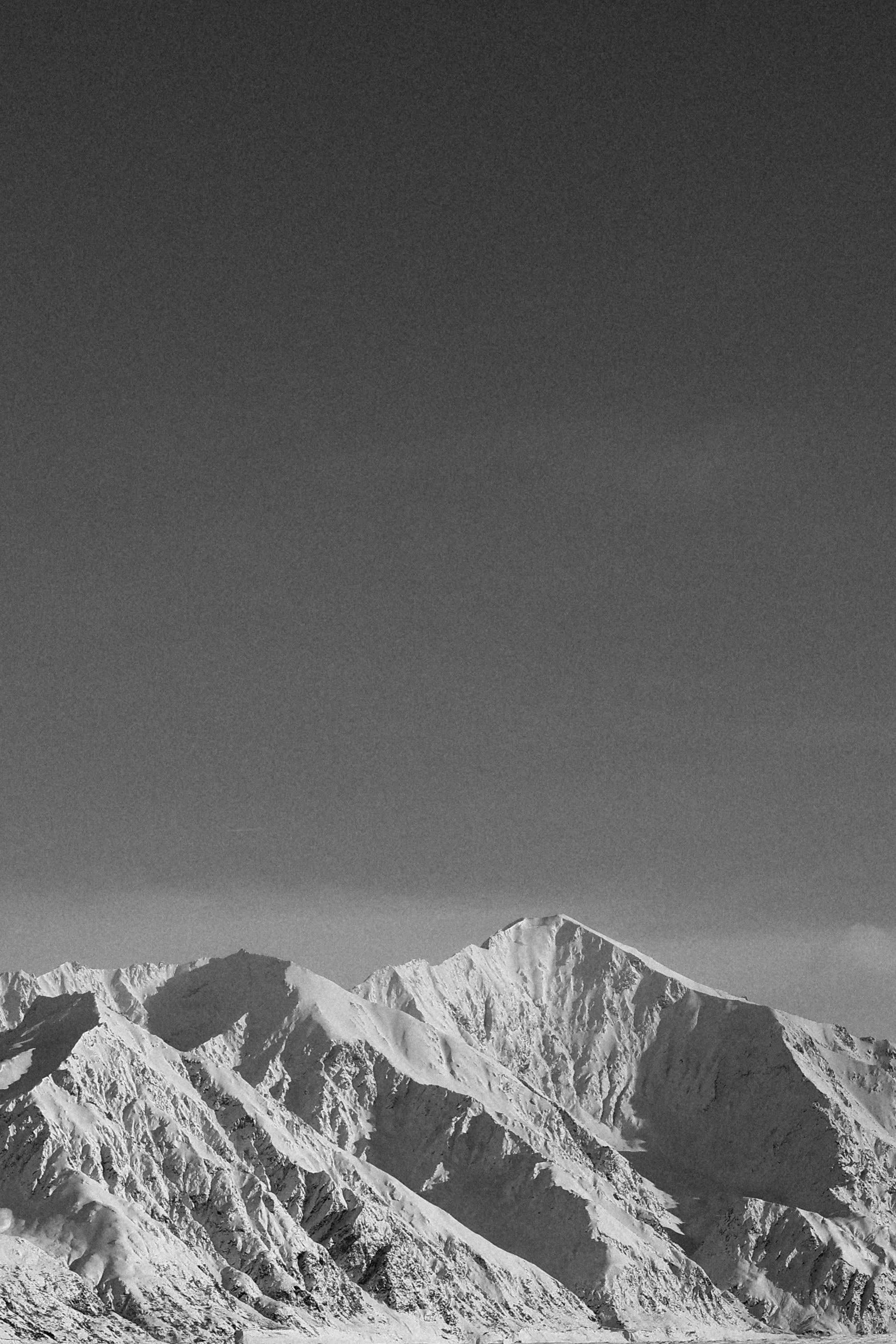
PRINT SIZES
STANDARD
60” x 40” Unframed
72” x 52” Framed
Edition of 4
LARGE
75” x 50” Unframed
87” x 62” Framed
Edition of 4