BLOOD AND HONEY
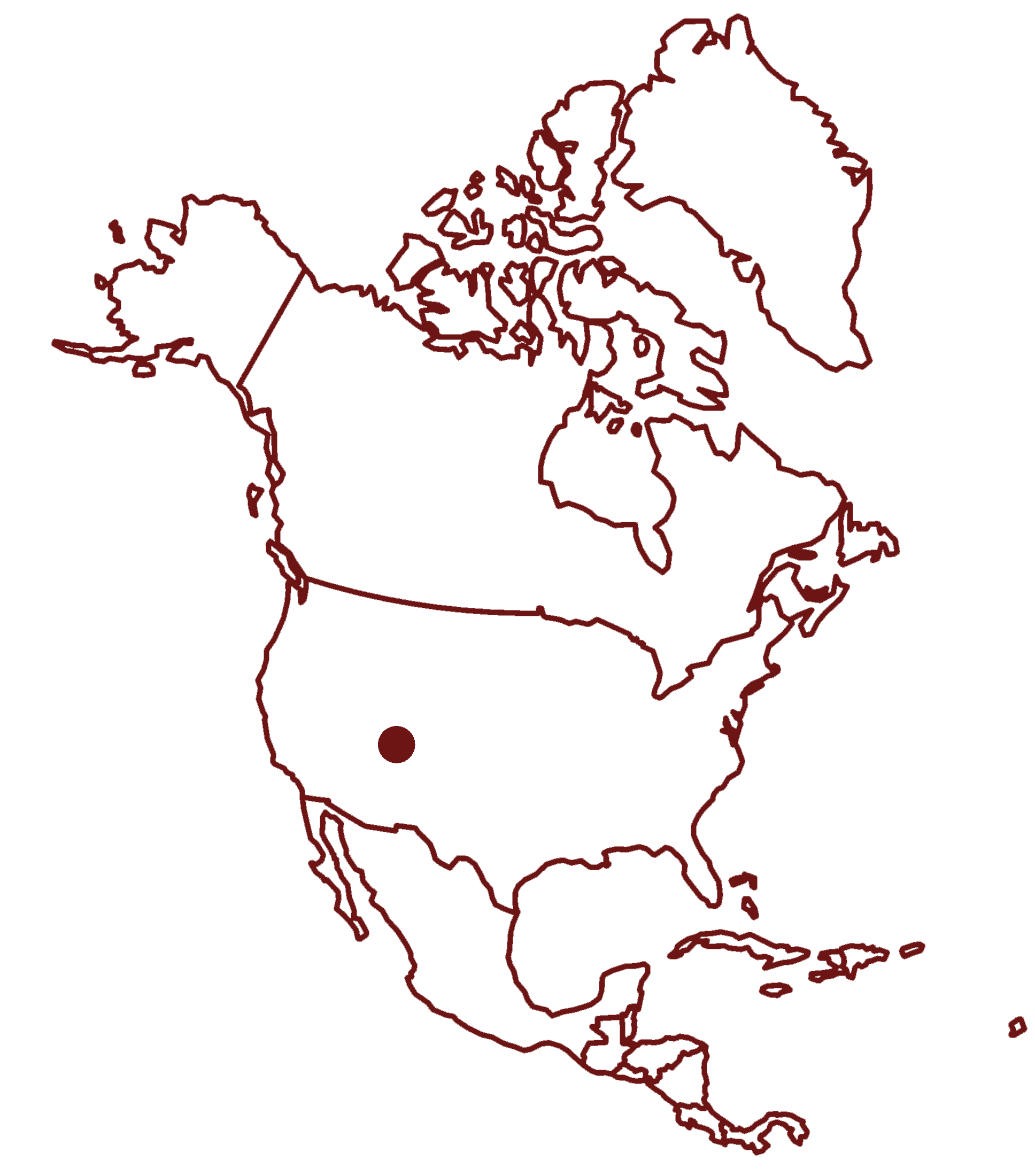
GRAND VALLEY, COLORADO
SOUL
And what a strange thing,
to be born into the middle
of something
that has never ended.
To know its warmth
before its history,
its beauty
before its sorrow.
We inherit the silence
as surely as the song.
The sweetness of a name
spoken before its meaning,
the peculiar weight
of something handed down
by those who had so little
left to give.
Who have looked upon the absence
and called it peace.
And silence
has never been proof
that nothing remains
to be said.
There is no tenderness
in the taking.
But in the keeping,
something almost unbearable.
To know that what survives
must sometimes become
what it has never been.
I wonder when a love
becomes a thing to be defended,
and when defending it
becomes a reason to forget
what made it beautiful.
For there is a difference
between holding something dear
and holding it above all else.
Between the hand that tends the garden
and the hand that closes the gate.
And still there is tenderness.
Only the blood
that brought us here,
and the honey
that makes us stay.
SPIRIT
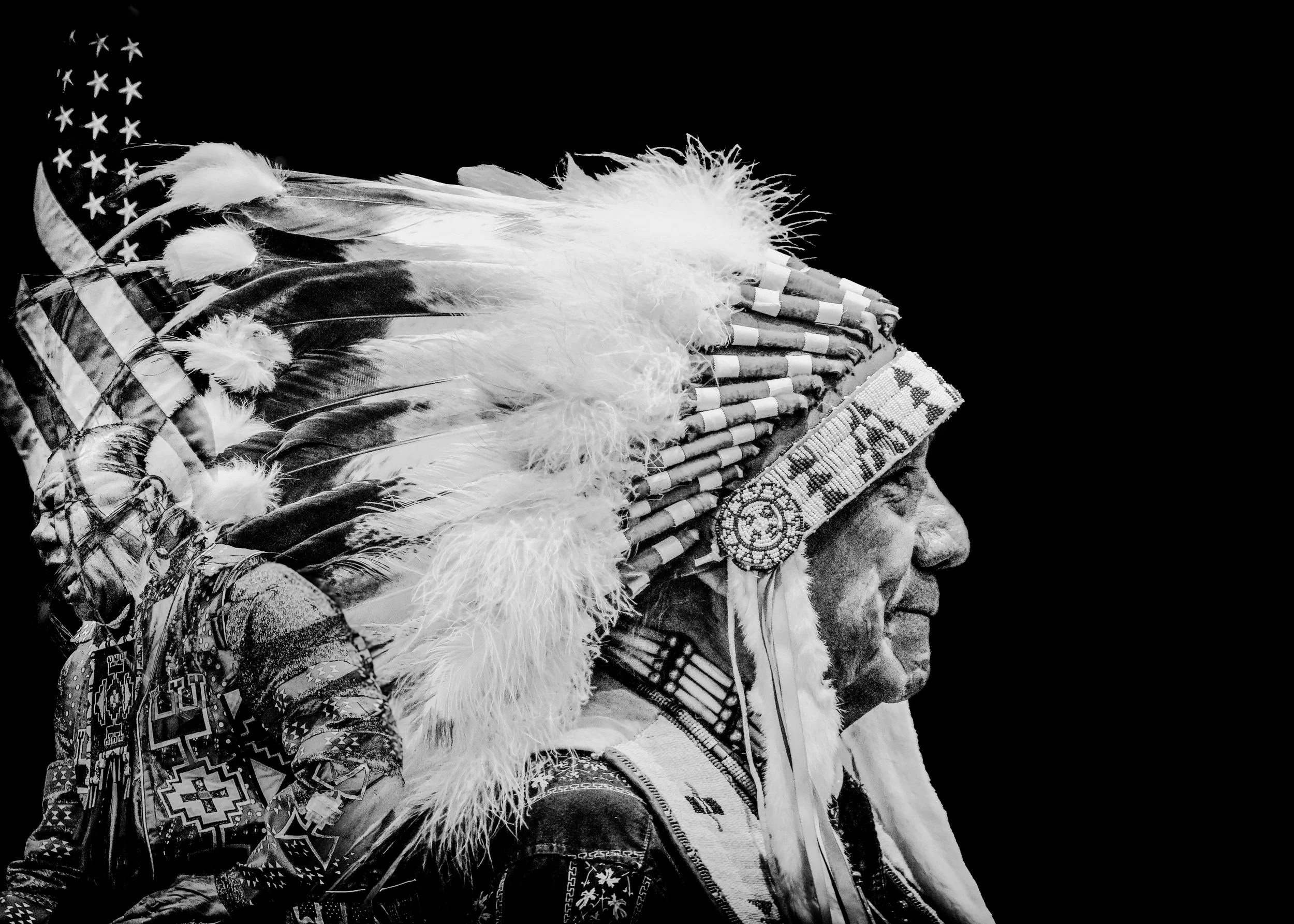
ROLAND McCOOK
Roland McCook (born June 28, 1941) is a member of the Uncompahgre Band of the Ute Indian Tribe and former chairman of the Northern Ute Tribe.
McCook was raised on the Uintah and Ouray Reservation in Utah. He attended Whiterocks Boarding School and later studied at the College of Eastern Utah and Weber State University. He is a descendant of the family of Ute Chief Ouray and Chipeta.
He worked for the Bureau of Land Management and Bureau of Indian Affairs before entering tribal government in 1995. Over approximately nine and a half years, he served as both vice chairman and chairman of the Ute Indian Tribe.
McCook subsequently served on the Smithsonian Institution's Native American Repatriation Review Committee, which oversees the return of Native American human remains and cultural objects.
In 2008, he relocated to western Colorado. In 2013, he founded Native American Cultural Programs, a nonprofit organization providing educational presentations, cultural programming, and historical research concerning Indigenous peoples.
McCook continues to lecture on Ute history, federal Indian policy, cultural traditions, and the historical displacement of the Ute people from Colorado.
MOONTEE SINQUAH
Moontee Sinquah is a Hopi, Tewa, and Choctaw musician, singer, dancer, and cultural educator from the village of Shungopavi on the Hopi Reservation in northern Arizona. He belongs to the Hopi Water Clan.
Sinquah grew up participating in traditional Hopi ceremonies and developed an interest in music from an early age. He is a traditional singer, flute player, drum maker, and champion Grass Dancer.
He is a four-time World Champion Hoop Dancer, competing at the Heard Museum's annual World Championship Hoop Dance Contest in Phoenix, Arizona. He began hoop dancing at approximately age 40, learning from his sons, Sampson and Scott Sixkiller Sinquah, who had trained under champion dancer Quentin Pipestem.
Sinquah has performed throughout the United States, Canada, Europe, and Malaysia, including appearances at the 2002 Salt Lake City Winter Olympics and Denmark's Roskilde Festival.
His musical career includes collaborations with Keith Secola, Derek Miller, and Tara Nevins, as well as performances with Buffy Sainte-Marie and Bonnie Raitt. He has also received two nominations for the Native American Music Awards.
Alongside his sons, Sampson and Scott, Sinquah performs as part of the Sinquah Family Dance Troupe, presenting traditional and contemporary Indigenous music and dance at festivals, cultural events, and educational programs internationally.
DISPLACEMENT
The Ute people are Indigenous to the American West, with ancestral territories spanning much of present day Colorado and Utah.
During the nineteenth century, federal treaties and agreements progressively reduced Ute territory. The Brunot Agreement of 1873 ceded approximately 3.7 million acres in the San Juan Mountains. In 1881, the Uncompahgre Ute were forcibly relocated from Colorado to Utah.
ASSIMILATION
Throughout the nineteenth and twentieth centuries, the United States operated boarding schools intended to assimilate Indigenous children into Euro-American society. Indigenous languages, religious practices, and cultural traditions were frequently prohibited.
A 2024 Department of the Interior investigation identified 417 federal Indian boarding school institutions and documented at least 973 deaths of Indigenous children, acknowledging that the actual number was likely considerably higher.
In 1892, Richard Henry Pratt, founder of the Carlisle Indian Industrial School, declared:
“Kill the Indian in him, and save the man.”
— Richard Henry Pratt, 1892
Funny, they weren't able to kill him, which contributed to our victory in the Pacific.
CITIZENSHIP, SERVICE, AND SURVIVAL
The Indian Citizenship Act of 1924 granted United States citizenship to Indigenous Americans born within the country's territorial limits who were not already citizens. Voting restrictions nevertheless persisted in several states.
During the Second World War, approximately 400 Diné (Navajo) Marines served as Code Talkers, using their native language to transmit military communications across the Pacific. Their code was never successfully deciphered by Japanese forces.
The program was declassified in 1968. The original 29 Navajo Code Talkers received Congressional Gold Medals in 2001, while other qualifying Navajo Code Talkers received Silver Medals. The Code Talkers Recognition Act of 2008 authorized medals recognizing Code Talkers from additional Indigenous nations.
Federal restrictions on Indigenous religious and cultural practices continued into the twentieth century. The American Indian Religious Freedom Act of 1978 established a federal policy protecting Indigenous religious freedom.
PRINT SIZES
STANDARD
70” x 50” Unframed
82” x 62” Framed
Edition of 4
LARGE
84” x 60” Unframed
96” x 72” Framed
Edition of 4